U.S. Projects Record Revenue from New Tariffs
US tariffs could generate record monthly revenue and affect dozens of countries in a new stage of the trade war.
Posted on 08/08/2025 at 23:14






- US imposes new tariffs
- Revenue could surpass record
- Wide list of countries affected
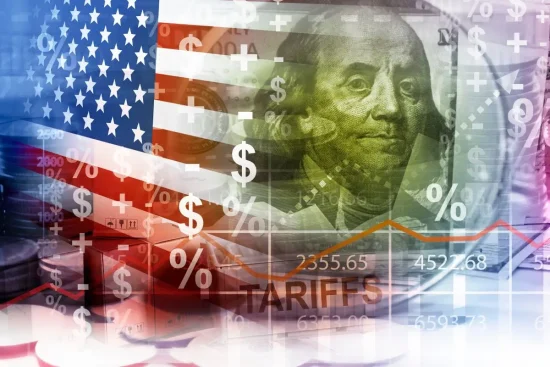
According to the EFE news agency, the United States began this Thursday the implementation of an expanded tariff scheme that, according to the Government, could generate monthly revenues close to $50 billion.
Commerce Secretary Howard Lutnick stated that in July, public coffers collected $30 billion thanks to the levies announced in April by President Donald Trump.
At that time, the president set global base tariffs of 10%, along with “reciprocal” rates that remained on hold until their activation at midnight this Thursday.
Lutnick explained in an interview with Fox Business that the new levies on dozens of countries will make it possible to reach the record figure of $50 billion per month.
Special tariffs on strategic sectors
📽️ VIDEO | US expects to take in $50 billion per month from tariffs: Lutnick 🇺🇸 pic.twitter.com/pbsfc5JKNg
— El Economista (@eleconomista) August 7, 2025
The official added that the additional 200% tariffs on pharmaceuticals and 100% on semiconductors and chips, recently announced by Trump, could push annual revenue to $1 trillion, although this estimate is questioned by analysts.
“These are astounding figures for the United States, and nobody is retaliating,” Lutnick said, asserting that the weight of the American consumer in the global economy favors the strategy.
Trump celebrated the entry into force of the tariffs with a message on his Truth Social network: “!!!IT’S MIDNIGHT!!! BILLIONS OF DOLLARS IN TARIFFS ARE FLOWING INTO THE UNITED STATES!”
The measure is part of the trade war the president has waged since returning to power in January, with the stated aim of balancing the trade deficit and “protecting domestic industry.”
List of countries with US tariffs

Among the new “reciprocal” tariffs are those agreed with the United Kingdom, China, Vietnam, Japan, the Philippines, Indonesia, the European Union, South Korea, and Pakistan.
Unilateral barriers also went into effect against countries without agreements with Washington, such as India, Switzerland, South Africa, and Venezuela.
The tariffs range from 10% for nations with a trade surplus with the US, such as Chile, Colombia, or Argentina, to 50% for Brazil, imposed as retaliation for what Trump considers unfair treatment toward Jair Bolsonaro.
India will also face an extra 25% tariff on its purchases of Russian crude, which will raise its total rate to 50% by the end of August.
Higher levies and key sectors

After Brazil and India, the countries with the highest tariffs are Syria (41%), Laos (40%), Myanmar (40%), and Switzerland (39%).
The Government also set a 50% tariff on steel, aluminum, and copper—key materials for industry.
A general tariff of 25% is also maintained on vehicles not manufactured in the US and on essential components such as engines, transmissions, and electronics.
The USMCA member countries—Canada and Mexico—are exempt from this levy due to previous trade agreements.
Economic impact and next steps
For the White House, the measure will strengthen the US’s negotiating position and increase tax revenue without harming the local consumer.
However, economists and chambers of commerce warn that higher tariffs could raise product prices and provoke retaliation in the medium term.
The Trump administration maintains that foreign companies will absorb most of the cost, thanks to their dependence on the US market.
The Commerce Department will assess the initial impact of these measures in September and does not rule out additional adjustments.
Tense international scenario over US tariffs
Several affected governments have chosen not to respond immediately, adopting a wait-and-see stance ahead of possible negotiations.
In Brussels, the European Union said it will analyze the tariffs before defining actions, while China called on Washington to resume dialogue.
With this trade offensive, Trump deepens his pressure strategy to reshape global trade in terms favorable to the United States.
The outcome, according to both critics and supporters, will mark a key chapter in the international economy in the coming years.
 Related post